 Reviews

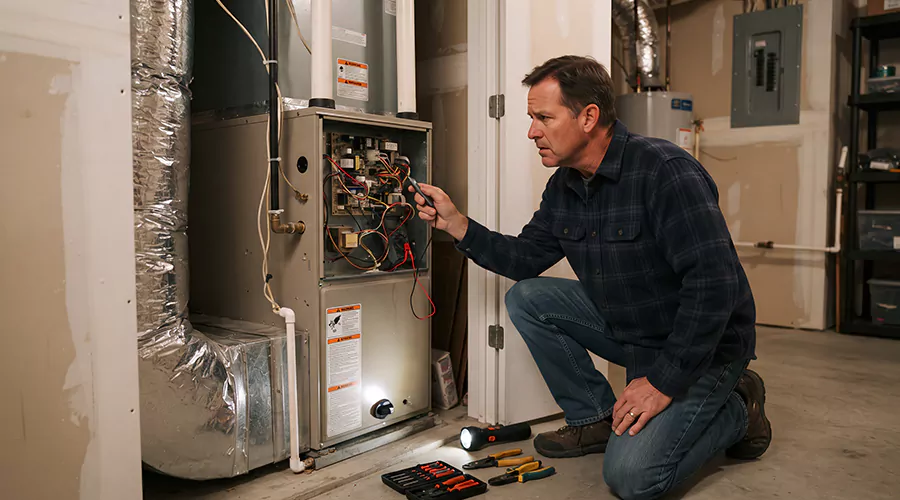
An air handler not turning on can come from a $0 thermostat setting or a blower motor failure that averages about $560 in 2026. A tripped electrical circuit can stop the indoor unit completely. A clogged filter can also contribute to an overheating shutdown. More expensive failures involve the control board or blower motor.
Start with the thermostat and visible power controls before assuming the indoor equipment has failed. No airflow from every supply vent is the strongest sign that the indoor blower is not operating. If the outdoor condenser runs while every indoor vent stays silent then the problem is likely on the indoor side.
Ignoring the failure can create another problem. An outdoor cooling unit that operates without normal indoor airflow can contribute to evaporator coil freezing. The resulting water after thawing can then create drainage problems around the indoor equipment.
What Does the Air Handler Do?
The air handler moves conditioned air through your duct system. It normally contains the indoor blower and evaporator coil. It may also contain electric heating components in some systems. When the indoor unit stops operating there may be no airflow even if the outdoor equipment still starts normally. An air handler unit is normally connected to a heat pump or central air-conditioning system. The outdoor equipment handles heat transfer while the indoor blower moves air across the coil.
The AC air handler does not perform the same job as the outdoor condenser. The condenser releases heat outside during cooling. The indoor equipment pulls household air across the evaporator coil before sending that air through the ducts. An HVAC air handler can also serve a heat-pump system during winter. The blower moves warmed air through the same duct system when the heat pump is operating in heating mode. This distinction matters during diagnosis. If the outdoor equipment is running but every register is silent then checking outdoor components first can send troubleshooting in the wrong direction.
Why Won't My Air Handler Start?
A dead air handler usually points to a thermostat command problem or an electrical interruption. A condensate safety switch can also stop operation when water backs up. If power reaches the equipment correctly then the diagnosis moves toward the blower capacitor or motor. The control board can also fail.
The Thermostat is Not Calling for Operation
Check the thermostat before touching anything near the indoor equipment. For cooling mode set the thermostat several degrees below the current room temperature. For heating mode set it several degrees higher. Set the fan to Auto for normal operation. You can temporarily select On as a diagnostic check.
If selecting Fan On starts the blower then the blower can operate. The normal cooling or heating control sequence becomes the next area to investigate. A blank thermostat can point to dead batteries on models that use them. It can also indicate loss of low-voltage power.
The Indoor Circuit Has Lost Power
Indoor equipment normally has its own electrical circuit. That means the outdoor condenser can have power while the indoor blower has none. Check your electrical panel for an HVAC breaker that is visibly tripped. Some systems also have a local disconnect or service switch near the indoor equipment.
Treat repeated trips differently from a one-time interruption. A breaker that trips again is responding to an electrical condition that has not been corrected. If the entire HVAC not turning on symptom affects both indoor and outdoor equipment then the problem may be farther upstream. A thermostat power issue can also affect the complete startup sequence.
The Air Filter is Severely Restricted
A clogged filter reduces airflow through the indoor equipment. Restricted airflow makes the blower work harder and can contribute to overheating. Check the filter visually. Replace it when heavy dust blocks the filter surface.
Many manufacturers recommend checking filters monthly during periods of heavy HVAC use. Replacement intervals commonly fall between one and three months depending on the filter and household conditions. A new filter will not repair a failed motor. It can remove an airflow restriction that contributed to the original problem.
A Condensate Float Switch Has Opened
Cooling creates moisture at the evaporator coil. That water normally flows through the condensate drain. A blocked drain can allow water to rise in the drain pan. Many systems use a float switch that interrupts operation before the pan overflows. Look for standing water around the air handler without removing equipment panels. Water near the drain connection makes a condensate problem more likely.
This condition is especially worth checking with an air handler in attic because a drain overflow can damage ceilings below the equipment. Never bypass a float switch to make the system run. The switch exists to limit water damage.
The Blower Capacitor Has Failed
Some blower motors use a run capacitor to support normal motor operation. A weak or failed capacitor can leave the blower unable to start. One possible clue is a humming sound without normal airflow. Another is intermittent startup. The same symptoms can come from a motor problem. The sound alone does not prove the capacitor is bad.
HVAC repair pricing in 2026 commonly puts capacitor work around $100 to $250. The exact amount depends on the component and labor market.
The Blower Motor Has Failed
The blower motor physically moves household air through the duct system. A failed motor can make the indoor equipment appear dead even while the outdoor condenser continues operating. Blower motors often give warning signs before complete failure. Airflow can become weaker. Startup noises can also change. Current 2026 national pricing puts average blower motor replacement near $560. Some advanced motors can push the total above $1,000. Hard-to-access or high-end replacements can reach about $2,400.
Motor type makes a large difference. A basic PSC motor generally costs less than an electronically commutated motor.
The Control Board or Relay Has Failed
The control board receives operating commands and sends electrical instructions to components inside the system. A failed relay can also stop the blower from receiving the power it needs. A board problem can cause intermittent operation before a complete shutdown. The system may work after one thermostat call and fail during the next.
Current 2026 HVAC repair data places circuit-board repairs around $100 to $600 for many systems. More complex equipment can cost more. Internal electrical diagnosis should not be based on symptoms alone. A dead motor and a dead control output can create nearly identical behavior at the vents.
How Does an Air Handler Problem Get Worse?
An indoor no-start problem can move from a simple control issue to a costly component failure. A thermostat correction may cost nothing. A blocked drain can often remain relatively inexpensive. Motor or coil damage raises the potential expense significantly. Full replacement becomes relevant when several expensive parts are failing.
| Stage | What you may notice | Possible cause | Typical 2026 cost |
|---|---|---|---|
| Early | No response after a setting change | Thermostat setting | $0 |
| Power issue | Indoor equipment is completely silent | Electrical interruption | $0 if no repair is needed |
| Drain shutdown | Water appears near the indoor unit | Drain line blockage | $75 to $200 |
| Start problem | Blower hums without moving air | Capacitor | $100 to $250 |
| Control failure | Operation becomes intermittent | Circuit board | $100 to $600 |
| Motor failure | No airflow with an active thermostat call | Blower motor | About $560 average |
| Major indoor repair | Coil damage is confirmed | Evaporator coil | $600 to $2,400 |
| Replacement stage | Aging equipment has multiple failures | Full indoor unit | $1,800 to $3,500 |
The air handler cost becomes a bigger consideration when the existing unit is already old. Current 2026 national data puts replacement around $1,800 to $3,500. The reported average is about $2,800.
Replacement should not be the first conclusion when airflow disappears. A $100 control problem can create a symptom that looks similar to a much larger failure.
One useful clue is whether the failure is consistent. A blower that starts only sometimes can point toward an electrical or motor problem that is progressing rather than resolving itself.
What Warning Signs Should You Check?
An indoor unit usually gives clues before complete shutdown. Reduced airflow and changed motor sounds are common examples. Water around the equipment provides another useful clue. The strongest diagnostic pattern comes from comparing thermostat behavior with indoor airflow while also observing whether the outdoor equipment starts normally.
- No air comes from any supply register.
- The thermostat calls for cooling but the indoor unit remains silent.
- The outdoor condenser starts while indoor airflow stays at zero.
- The blower hums without reaching normal speed.
- Airflow has become weaker over several weeks.
- The indoor breaker has tripped.
- Water collects beneath the equipment.
- Frost becomes visible around the indoor coil area.
- The blower starts during some cycles but fails during others.
- A hot electrical smell appears near the indoor equipment.
The outside unit running with no indoor airflow is a particularly useful clue. The indoor circuit and outdoor circuit are normally separate. One side can therefore continue operating after the other side fails.
Air handlers can also stop because one protective device has reacted to another problem. Replacing the protective device without finding the underlying cause can leave the original fault in place.
What Safe DIY Test Can You Perform?
A thermostat fan test is one of the safest ways to separate a blower problem from a normal heating or cooling call. Set the system mode to Off first. Change the fan setting from Auto to On. Wait several minutes and check whether air begins moving from the supply registers. Start at the thermostat. Confirm that its display is active.
Move the fan setting to On. Listen near a supply register rather than opening the equipment cabinet. If normal airflow begins then the blower is capable of operating at that moment. The failure may be connected to the cooling or heating control sequence. If nothing happens then inspect the filter. Replace it when it is visibly clogged. Look around the indoor cabinet for water. Do not defeat a visible float switch if the drain pan is full.
Check the electrical panel visually. Avoid repeated resets when a breaker has already tripped more than once. Stop the test if you smell overheating insulation. Stop if you hear strong electrical buzzing. Do not open the blower compartment for electrical testing. Motors and capacitors can involve hazardous voltage.
What If the Outdoor Unit Runs but the Air Handler Does Not?
An operating condenser with no indoor airflow usually points toward an indoor power problem or blower failure. The outdoor and indoor sections normally receive power separately. A float switch can also disable the indoor side. Continuing to cool without airflow can contribute to evaporator coil freezing. Check the thermostat fan command first.
Next inspect the filter. Look for water around the drain pan. A frozen coil can sometimes become visible as frost near refrigerant tubing or around accessible parts of the indoor cabinet. Ice indicates that the system should not keep operating normally. When ice melts it can create a large amount of water. That makes drainage particularly important after a frozen coil.
This symptom also explains why the home can become warm despite hearing the outdoor equipment. Refrigerant heat transfer cannot cool the rooms properly when the indoor blower does not move air across the evaporator coil.
When Should You Call a Professional?
Professional diagnosis is appropriate when basic thermostat and filter checks leave the air handler dead. Repeated breaker trips need electrical testing. Persistent water problems need the drainage system checked. Humming without startup can require capacitor or motor testing. Frozen coils can point toward airflow or refrigerant faults.
A technician can measure whether line voltage reaches the indoor equipment. Low-voltage control signals can then be checked. Motor amperage provides another diagnostic clue. A motor drawing abnormal current can overheat or shut down.
The run capacitor can be tested against its rated capacitance. Replacing it based only on a humming sound can waste money when the motor itself has failed. Control-board outputs can also be checked before a board is replaced. This matters because wiring faults can imitate board failure.
Current 2026 repair pricing shows why diagnosis matters:
| Repair | Typical 2026 range |
|---|---|
| Drain line cleaning | $75 to $200 |
| Capacitor | $100 to $250 |
| Circuit board | $100 to $600 |
| Transformer | $200 to $600 |
| Blower motor | $200 to $700 for many repairs |
| Advanced blower motor replacement | Up to $2,400 |
| Evaporator coil | $600 to $2,400 |
Access can change labor cost. Equipment in a closet is usually easier to reach than equipment above a finished ceiling.
Existing air handler installation conditions also matter when replacement becomes necessary. Restricted attic openings can increase labor because the old equipment must be removed before the new cabinet can be positioned.
Full replacement costs about $1,800 to $3,500 in typical 2026 national pricing. Repairing one failed component usually makes more financial sense when the remaining equipment is in good condition.
How Can You Prevent Another Air Handler Shutdown?
Preventive care focuses on airflow and drainage because both affect indoor equipment operation. Check the filter monthly during heavy-use periods. Keep supply registers unobstructed. Watch the condensate drain during cooling season. Annual system inspection can identify electrical wear before the blower stops completely. Start with filter replacement. A heavily restricted filter increases static pressure and makes the blower work harder.
Look at the drain area during cooling season. Water where it has never appeared before deserves attention before the pan fills. Keep storage away from the indoor cabinet. Clear access makes visual checks easier and reduces the chance of blocking return airflow. Listen during startup once each month. A new hum or scraping sound can appear before complete motor failure.
Annual maintenance can include electrical measurements and coil inspection. Drainage can also be checked before peak cooling weather. Replacement becomes a different decision. An aging system with repeated motor or coil failures may cost more to keep repairing than a properly matched new system.
Conclusion
An air handler not turning on should be diagnosed from the thermostat toward the indoor equipment. Test the fan setting and inspect the filter. Look for water without opening electrical compartments. A repeated breaker trip or dead blower needs professional testing. This week, run the thermostat fan test and note whether airflow begins before the next heating or cooling emergency.
Frequently Asked Questions
Yes. The indoor equipment and condenser normally use separate electrical circuits. The outdoor unit can therefore operate even when the indoor blower has lost power or failed.
A severely restricted filter can reduce airflow enough to contribute to overheating or coil freezing. Some equipment can then shut down through protective controls.
A failed capacitor can prevent some blower motors from starting correctly. A failing motor can create a similar symptom so testing is needed before replacing parts.
Yes. A condensate float switch can interrupt operation when water rises too high. The shutdown helps reduce the risk of an overflowing drain pan.
Residential units commonly remain in service for about 10 to 15 years. Maintenance history and operating conditions can shorten or extend that period.
A single inexpensive repair often favors keeping the existing equipment. Replacement becomes more reasonable when an older unit needs repeated major repairs or when one repair approaches a large share of replacement cost.